
March 8th, International Women’s Day, is a date that invites us to remember the role of many women who contributed to the industrial development of our cities. In Alcoy, one of the most representative examples is that of the well-known Bambuneras of Alcoy, workers who for much of the 20th century took part in the manufacture of the famous Bambú rolling paper booklets.
For centuries, the paper industry has been one of the economic pillars of the region. Alcoy and the surrounding towns developed an intense manufacturing activity linked to paper production, first with paper mills and later with modern factories producing paper for many uses, from printing to rolling paper.
Alcoy’s paper-making tradition
The history of paper in Alcoy goes back centuries. Since the 18th century, there were numerous paper mills along the rivers of the region, using hydraulic power to produce handmade paper. With the industrialization of the 19th century, these mills evolved into modern factories, consolidating a strong paper industrial district.
Within this context, the production of rolling paper developed and eventually became one of the most recognized specialties of the area. The history of rolling paper in Alcoy can be explored in more detail in the historical section of our website.
Women in the workshops of Papeleras Reunidas
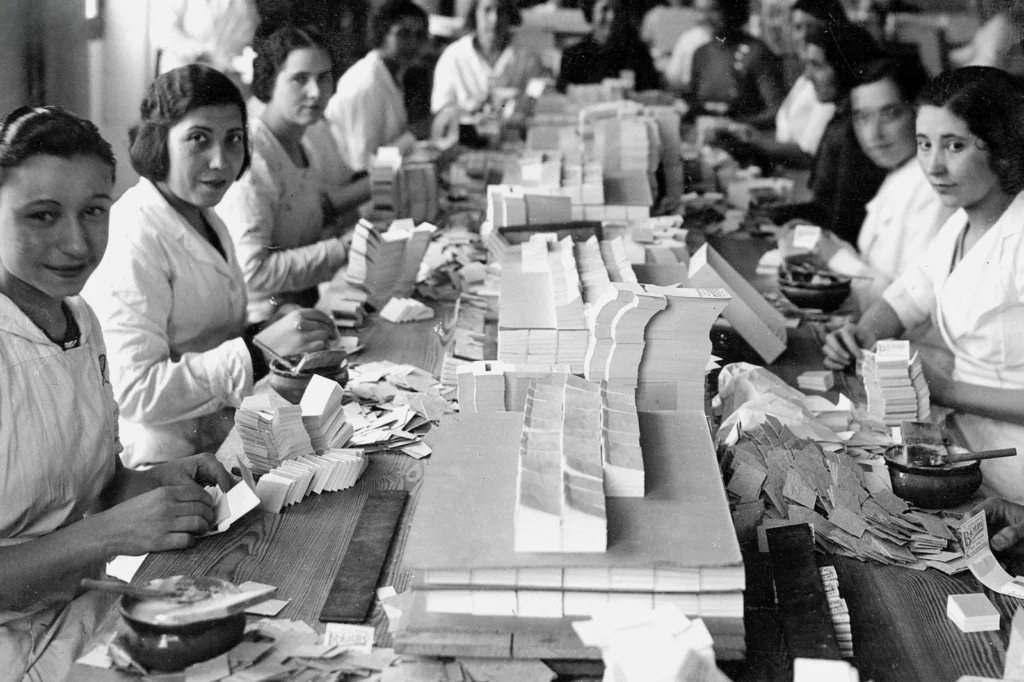
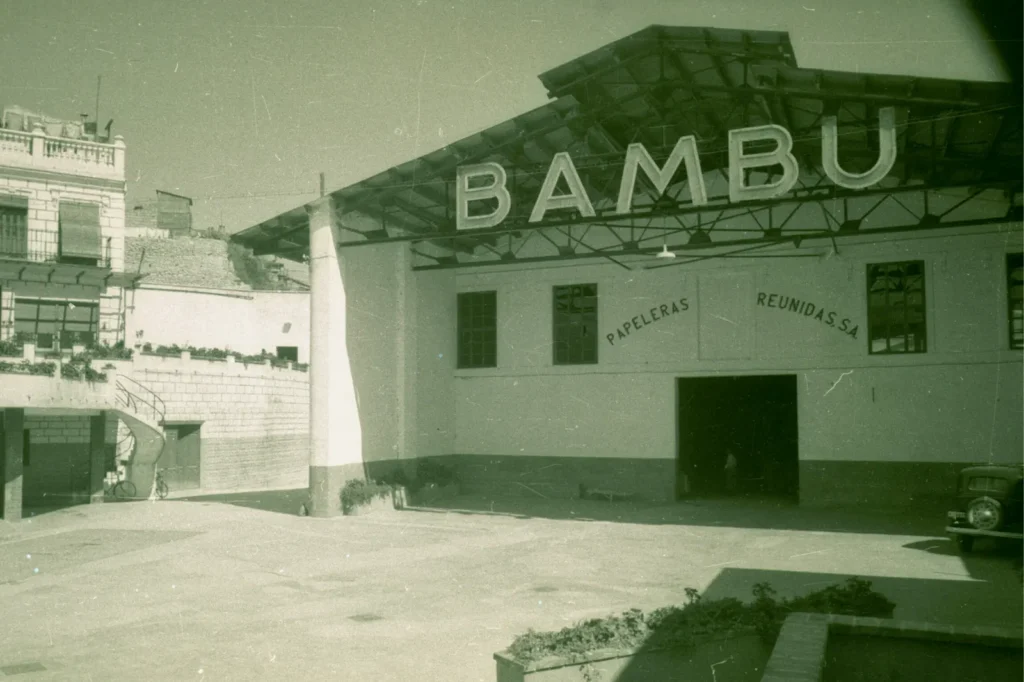
For much of the 20th century, hundreds of young women worked in the workshops of Papeleras Reunidas S.A., one of the most important companies in the paper sector in Alcoy. In its facilities, the well-known Bambú booklets were produced and later distributed in many countries.
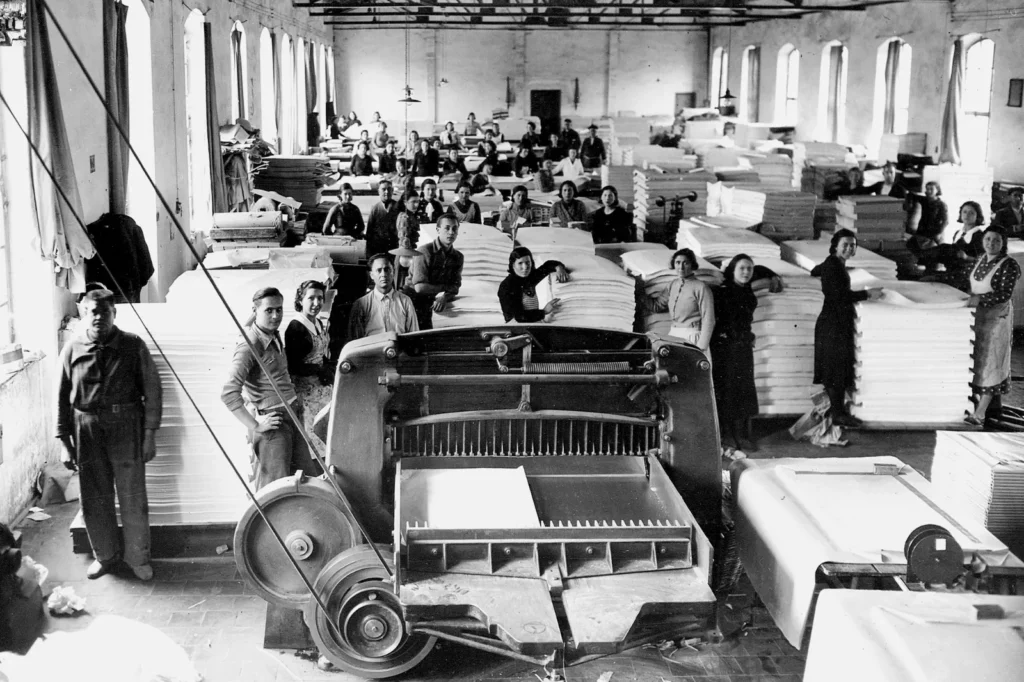
These workers were popularly known as bambuneras, a term that over time has become part of the city’s collective memory. In large workrooms, as shown in the historical images accompanying this article, the workers carried out tasks such as handling, folding, cutting and preparing the booklets. Their work required precision, speed and strong coordination between the different production processes.
Many of these young women began working at a very early age, at a time when female industrial labor was common in sectors such as textiles, paper and manufacturing. The importance of this industry was such that Alcoy eventually became one of the most significant centers for rolling paper production in Europe.
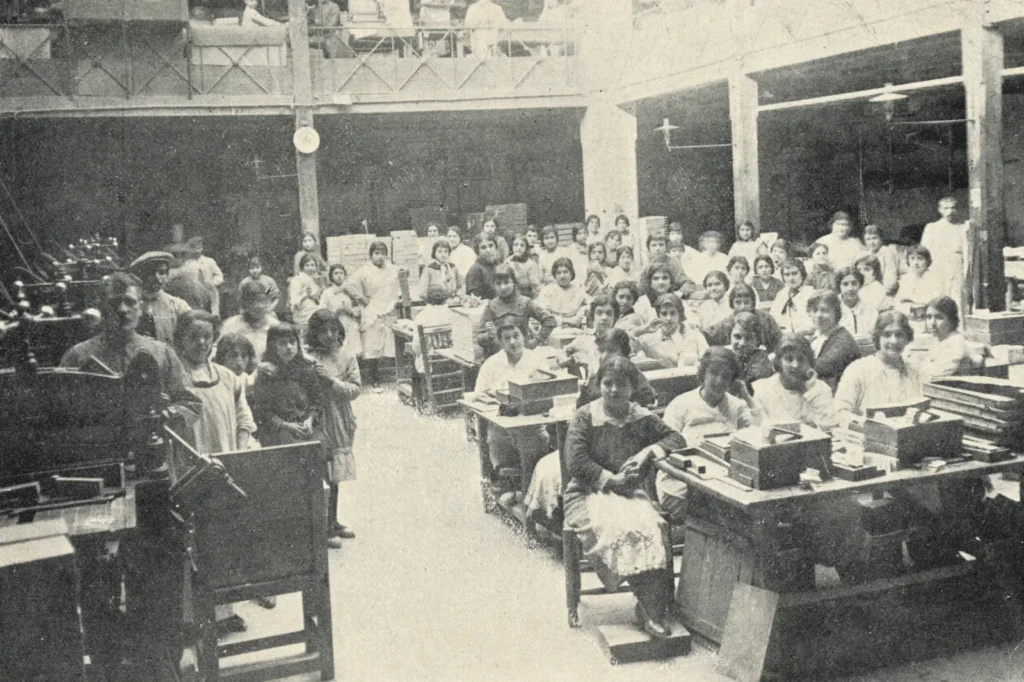
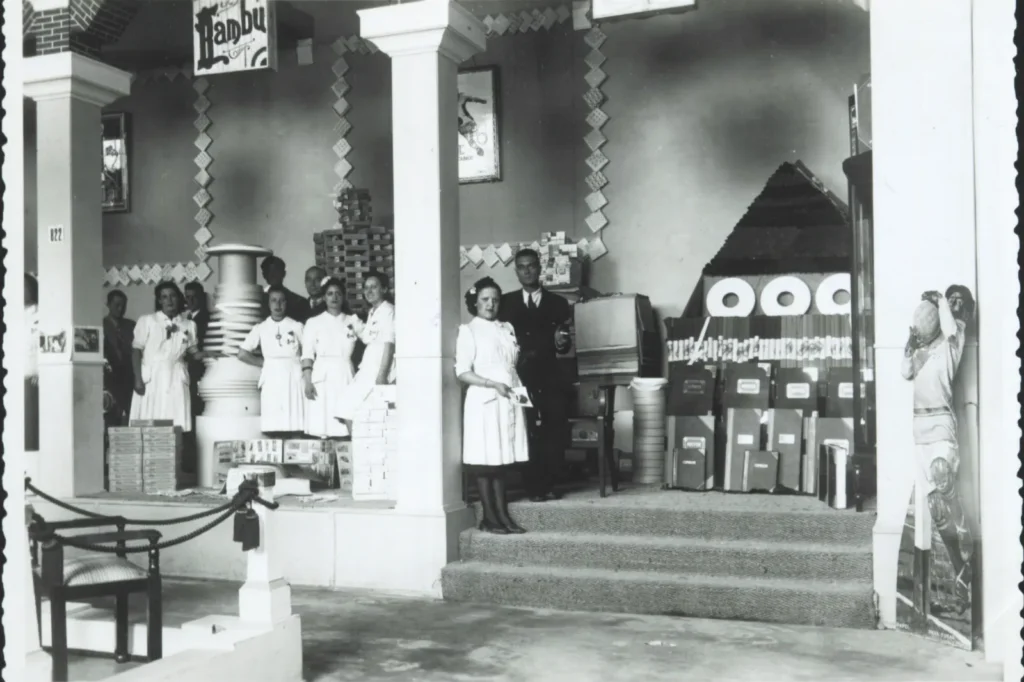
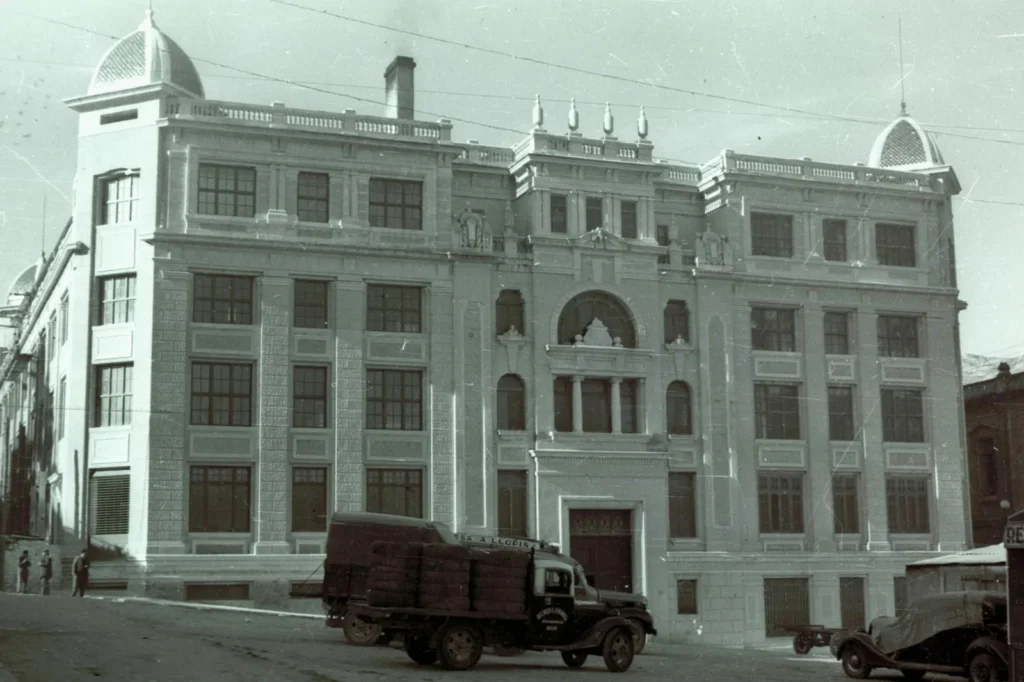
Various studies on the economic history of the city highlight the importance of this activity within Alcoy’s industrial fabric. For example, the Alcoy Historical Heritage Portal gathers extensive documentation on the evolution of the local paper industry, as well as its famous building located in Emilio Sala Square in Alcoy.
A historical episode: the 1945 strike
The history of the Bambuneras of Alcoy also includes an episode little known at national level but very significant, which took place in 1945, in the midst of post-war Spain.
In those years, work in factories was hard and labor conditions were strongly marked by the country’s economic situation after the Spanish Civil War. Alcoy’s industry remained one of the main sources of employment in the city, and many young women worked handling and preparing rolling paper booklets in companies such as Papeleras Reunidas.
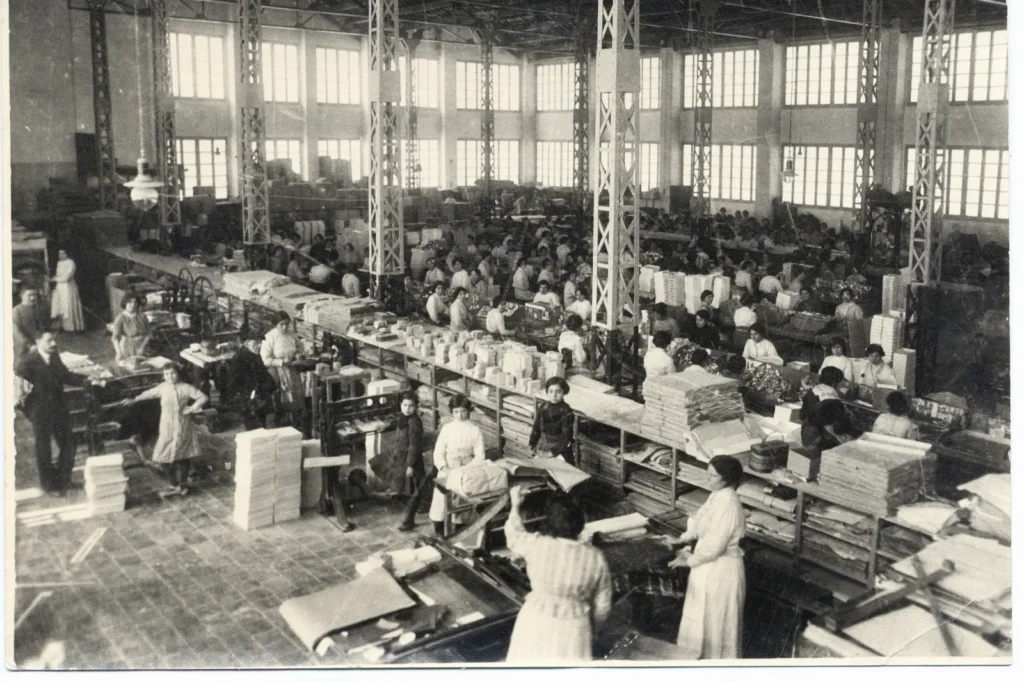
According to various studies on the industrial and social history of Alcoy, a group of workers from the Bambú factory carried out a form of protest known as a “sit-down strike”. Instead of leaving their jobs, the workers slowed down production as a sign of disagreement with certain working conditions. These kinds of actions were particularly delicate in that historical context. After the war, the Franco regime had suppressed traditional unions and any labor protest could have significant consequences for those involved.
For this reason, this gesture by the bambuneras has been remembered over time as a sign of determination and solidarity among workers rather than as an organized protest in the modern sense. Some media outlets and historical publications have recovered this episode as part of the city’s industrial memory. The newspaper Información reported some years ago on the tribute paid to these workers, highlighting their role in the social history of Alcoy. Likewise, the Valencian audiovisual archive recalls how these workers carried out one of the first labor protests recorded in post-war Spain.
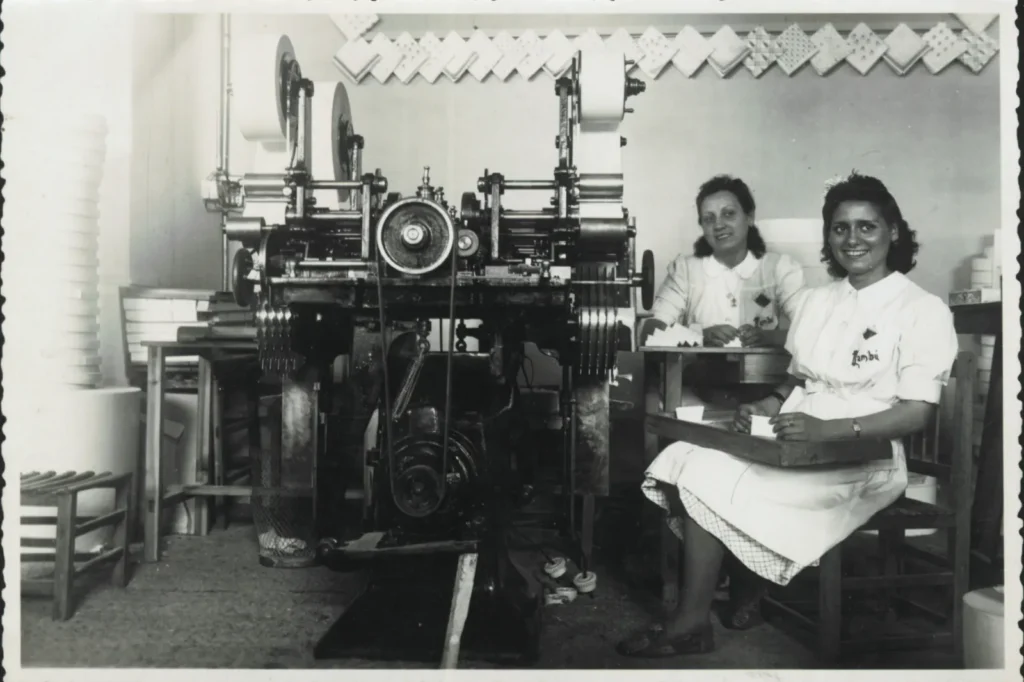
Beyond the specific details of the episode, these stories help us better understand everyday life in the factories of that time and the fundamental role played by women — and in this case specifically les Bambuneres — within Alcoy’s industrial history.
An industrial legacy that lives on
Although the sector has evolved significantly since those years, the paper-making tradition remains alive in the region.
Companies such as Iberpapel, based in the interior of Alicante, continue to develop this industrial activity, manufacturing rolling paper for international brands and preserving technical knowledge accumulated over generations. Among the brands linked to this tradition is also Pay-Pay, one of the historic rolling paper brands originating from Alcoy’s paper industry.
There are still Bambuneras working today
Today, the profession of the bambuneras is part of an industrial tradition that is gradually disappearing as generations pass. Many of these workers have already retired and the last bambuneras still active can be found in our company, Iberpapel, where the artisanal knowledge of the process is still preserved.
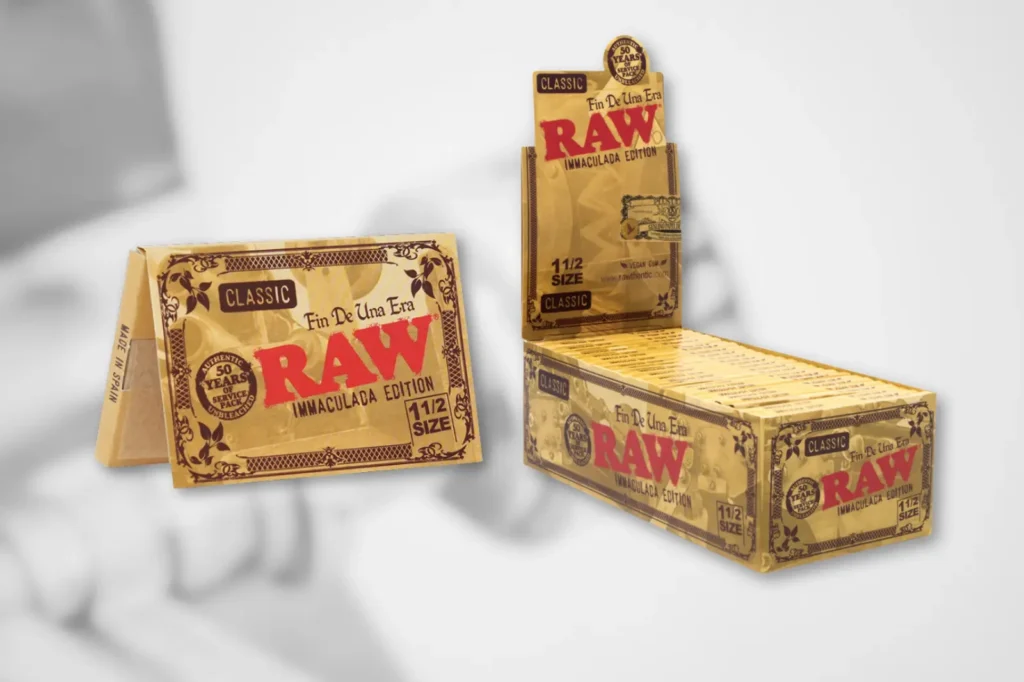
As a recent curiosity within the industry, the brand RAW released a limited edition booklet dedicated to Macu, a worker who retired after decades linked to rolling paper manufacturing; even the machine she had worked with for so many years was retired at the same time, in a symbolic gesture that reflects how an entire era of the industry is coming to an end.
Remembering the bambuneras of Alcoy means recognizing the work of hundreds of women who helped build an essential part of the industrial identity of our city. Their story forms part of Alcoy’s collective memory and the evolution of an industry that has accompanied the region for more than a century.
From Iberpapel…
thank you for everything.